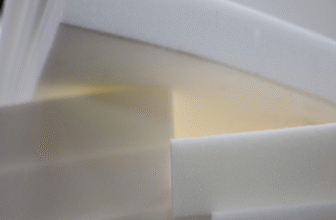
How Temperature and Humidity Affect Foam Performance
Foam materials are widely used for insulation, cushioning, and packaging, but their performance and lifespan can be significantly affected by environmental conditions. Temperature and humidity directly influence the physical and thermal properties of foam, causing changes in hardness, elasticity, and durability over time. High temperatures and moisture accelerate the degradation of foam, reducing its ability to maintain shape and insulate effectively.
Moisture can lead to mould growth and loss of foam resilience, while fluctuating temperatures impact its softness and stiffness. The combined effect of heat and humidity is often more damaging than either factor alone, causing a faster decline in foam quality and lifespan.
Understanding how temperature and humidity interact with different types of foam materials is crucial for selecting the right foam and ensuring optimal performance in specific environments. This knowledge helps extend foam life and maintain its functional properties throughout its intended use.
Impact of Temperature and Humidity on Foam Performance
Foam materials experience notable changes in mechanical properties when exposed to varying temperature and humidity. These environmental factors influence their thermal stability, moisture content, and physical structure, all of which affect performance and lifespan.
Thermal Stability and Degradation
Increasing temperature accelerates chemical degradation in foams, reducing their strength and stiffness. Heat exposure can soften the polymer matrix, causing a loss of mechanical integrity over time.
Humidity combined with elevated temperature worsens degradation by promoting hydrolytic reactions. This leads to faster breakdown of polymer chains, reducing foam durability.
Testing shows a marked decline in load-bearing capacity and elongation at temperatures above typical use ranges, especially under humid conditions. Temperature and humidity together create synergistic effects that amplify degradation beyond their individual influences.
Moisture Absorption and Compression Set
Foams absorb moisture to varying degrees depending on their cell structure and polymer composition. Increased humidity results in water uptake, which plasticises the material and alters its mechanical response.
Moisture also contributes to a higher compression set, meaning the foam loses its ability to recover original shape after being compressed. This effect is most evident in open-cell foams, which allow easier moisture ingress.
The loss of resilience impacts applications requiring consistent cushioning or insulation, as the foam becomes permanently deformed with repeated stress.
Changes in Density and Structure
Temperature fluctuations can cause expansion or contraction of foam cells, altering density and mechanical properties. High temperatures typically reduce density by expanding gas within the foam cells.
Humidity affects cell wall moisture content, which can soften or even weaken the cell structure. Long-term exposure to humid conditions leads to microstructural changes that reduce foam firmness and increase compressibility.
The combination of increased temperature and humidity often results in reduced foam stiffness and altered physical dimensions, compromising performance in load-bearing or insulating roles.
Factor
Effect on Foam
Notes
| High Temperature |
| Polymer softening and degradation |
| Accelerated ageing and loss of strength |
| High Humidity |
| Moisture absorption |
| Plasticisation; increased compression set |
| Combined Heat & Moisture |
| Synergistic degradation |
| Greater than individual effects; structure weakens |
Extending Foam Lifespan Through Environmental Control
Controlling environmental factors is crucial for preserving foam’s thermal and structural properties. Managing temperature, humidity, and physical exposure can significantly slow degradation and maintain insulation effectiveness over time.
Optimal Storage and Usage Conditions
Foam materials should be stored in cool, dry environments to prevent moisture absorption. High humidity accelerates deterioration by promoting fungal growth and reducing foam resilience.
Ideal storage temperatures typically range between 10°C and 25°C to avoid thermal stress that can cause expansion and contraction cycles. Avoid direct exposure to sunlight, as ultraviolet radiation breaks down foam polymers, reducing tensile strength.
During application, ensuring proper ventilation minimises trapped moisture, which can otherwise lead to long-term performance loss. Sealing foam from persistent water leaks or damp conditions preserves mechanical integrity and insulation capability.
Material Selection for Climate Resistance
Selecting foam materials based on climate helps improve lifespan in specific environments. Closed-cell foams resist moisture better than open-cell types, making them suitable for humid or wet areas.
Polyisocyanurate (PIR) foams generally retain thermal properties longer under high temperature and humidity compared to polyurethane (PUR) varieties. This makes PIR more appropriate for locations with frequent temperature fluctuations.
Additionally, foams with additives or coatings that block UV exposure extend durability outdoors. Matching foam density and formulation to expected environmental stress reduces degradation rates.
Regular Inspection and Maintenance
Routine checks for cracks, mould growth, or compression in foam materials identify early signs of environmental damage. Catching issues early allows for targeted repairs that prevent deeper problems.
Cleaning surfaces and repairing compromised seals maintain foam’s protective qualities. Moisture measurement tools help detect hidden dampness that may not be visible.
Scheduled maintenance plans based on local climate conditions ensure foam remains effective. Action taken before serious damage accumulates can extend life by years and preserve insulation performance.
Frequently Asked Questions
Foam performance and durability depend on multiple environmental and material factors. Temperature, moisture levels, and the type of foam all play crucial roles in how well foam maintains its properties over time.
What factors contribute to the degradation of foam over time?
Foam degrades due to extended exposure to moisture, temperature extremes, and physical wear. Poor installation can accelerate this process by allowing gaps or improper curing that compromise structural integrity.
Chemical breakdown of the foam’s polymers, combined with repeated mechanical stress, reduces its ability to bounce back or insulate effectively.
How do varying levels of humidity impact the integrity of foam materials?
High humidity increases moisture absorption in foam, especially open-cell types, leading to a loss of resilience and the potential for mould growth. This degrades both comfort and insulation capability.
Conversely, low humidity can cause foam to dry out and become brittle, shortening its lifespan and affecting elasticity.
Can temperature fluctuations significantly affect the performance of foam-based products?
Frequent temperature changes cause foam to expand and contract, which stresses the material, reducing flexibility and strength. Extreme heat can accelerate chemical ageing, while cold can make foam stiff.
These effects impact foam hardness and elongation, potentially compromising its insulating properties over time.
In what ways does the environment play a role in the deterioration of foam?
Environmental factors such as temperature cycles, moisture levels, and air quality influence foam’s viscoelastic properties. Seasonal changes cause variations in foam density and mechanical strength.
Exposure to pollutants or UV light can further degrade foam surfaces, leading to cracks or surface breakdown.
What measures can be taken to protect foam from extreme temperature and moisture conditions?
Ensuring proper installation under suitable temperature and humidity conditions is vital to longevity. Using foam types designed for specific environments can improve durability.
Maintaining controlled indoor humidity and avoiding spraying foam near the dew point help prevent moisture-related damage.
How do different types of foam respond to changes in temperature and humidity?
Closed-cell foam tends to resist moisture better and maintains structural integrity under varying conditions. Open-cell foam absorbs more water and is more vulnerable to humidity changes.
Polyurethane and polyether formulations may require adjustments in their chemical composition to adapt to seasonal temperature and humidity shifts.