Open-Cell vs Closed-Cell Foam: Differences, Uses and Benefits

Foam materials are widely used in insulation, packaging, and construction due to their unique structures, but understanding the science behind open-cell and closed-cell foam is essential for choosing the right type. These foams differ fundamentally in their cell structure: open-cell foam consists of interconnected pores, while closed-cell foam is made of sealed, individual cells. This structural difference directly affects their density, moisture resistance, and thermal performance.

Open-cell foam is lighter, more flexible, and allows air to pass through, making it suitable for interior applications where breathability is important. Closed-cell foam, being denser and more rigid, offers superior insulation and resists moisture penetration, which is crucial for damp or outdoor environments.

By exploring how these foams are formed and how their microscopic structures influence their properties, readers can better understand which foam type will meet their specific needs effectively.

Understanding Foam Structure

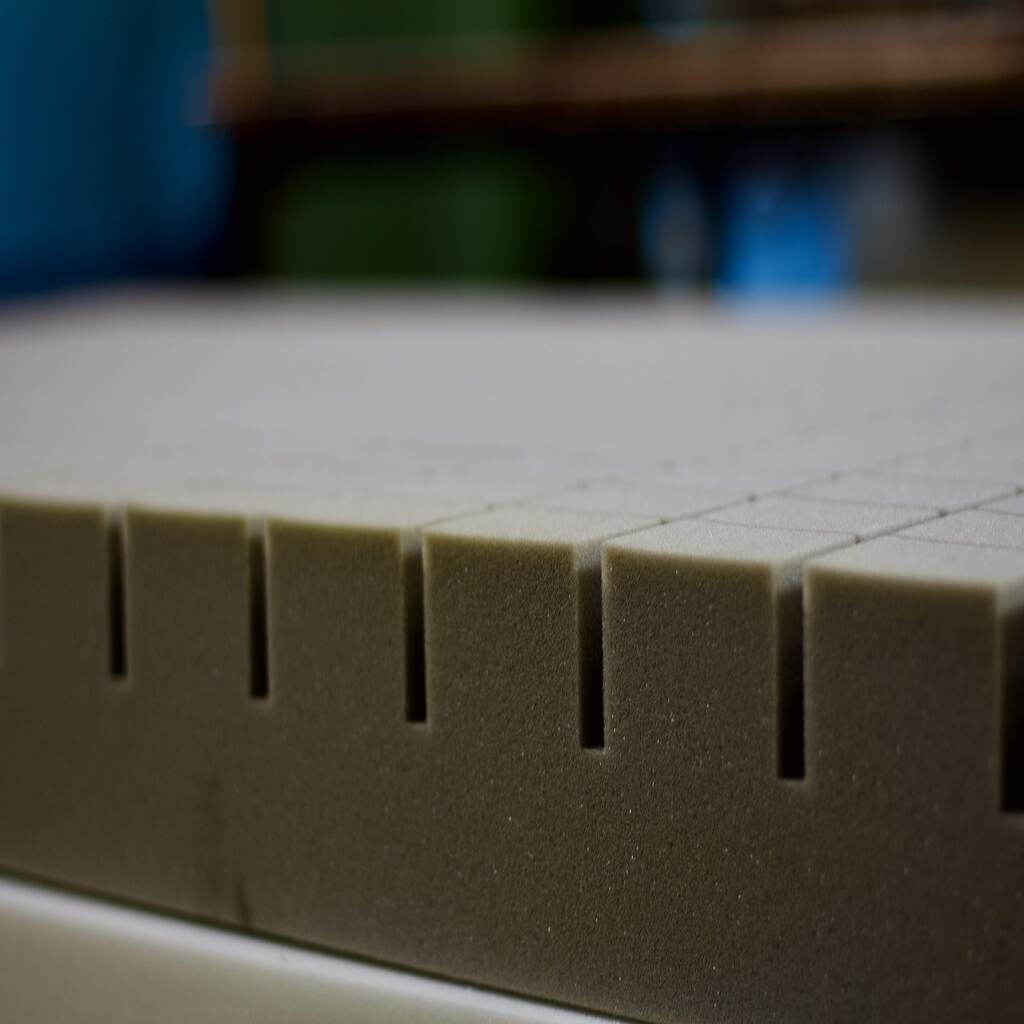
Foam structure is defined by how its cells are formed and arranged, directly influencing its physical properties and applications. Characteristics like cell openness, density, and material composition shape the foam’s performance in insulation, cushioning, and durability.

Key Characteristics of Open-Cell and Closed-Cell Foams

Open-cell foam features interconnected air pockets, making it softer and more flexible. Its porosity allows air and moisture to pass through, resulting in lower density and better sound absorption.

Closed-cell foam consists of tightly packed cells sealed from one another. This structure creates a rigid, denser material with superior resistance to moisture, air, and thermal transfer.

Property
Open-Cell Foam
Closed-Cell Foam
Cell Structure 
Interconnected pores 
Sealed, individual cells
 

Density

Lower 
Higher
 
Moisture Permeability 
High 
Low
 
Thermal Insulation 
Moderate 
High
 
Flexibility 
Soft, compressible 
Firm, rigid

Foam Formation and Cellular Architecture

Foams form through a chemical reaction where gas bubbles are trapped in a liquid polymer that solidifies rapidly. The size, distribution, and openness of these bubbles determine the foam type.

In open-cell foams, bubbles merge during formation, creating a network of shared walls and open spaces. In contrast, closed-cell foams maintain distinct, sealed bubbles surrounded by rigid walls.

This cellular architecture affects how foams behave under pressure, with open-cell foams compressing easily and closed-cell foams providing structural support and moisture barriers.

Material Composition

Both foam types mainly use polyurethane but differ in additives and formulations. Open-cell foam contains fewer blowing agents, which create larger, interconnected cells.

Closed-cell foam includes higher concentrations of chemical blowing agents and cross-linking agents to form dense, sealed cells. These chemical modifications enhance durability and waterproofing.

The composition also influences cost, with closed-cell foam typically being more expensive due to its complex manufacturing and enhanced properties.

Differences Between Open-Cell and Closed-Cell Foam

Mattress-Memory-Foam-topper

Open-cell and closed-cell foams vary significantly in their internal structure, physical characteristics, and insulating abilities. These differences influence their suitability for various applications, based on factors like flexibility, durability, and thermal performance.

Structural Variations

Open-cell foam consists of cells that are only partially enclosed, with interconnected spaces allowing air to flow freely within the material. This design makes it softer, more flexible, and easier to compress.

In contrast, closed-cell foam is made of completely enclosed, compact cells filled with gas. This structure increases its rigidity and makes it denser and more water-resistant. Closed-cell foam also provides better structural stability under stress.

These structural differences affect how each foam reacts to pressure, moisture, and long-term wear, critical in selecting the right foam for specific uses.

Density and Weight Comparison

Open-cell foam is generally lighter and less dense, with typical densities ranging from 0.5 to 1.5 pounds per cubic foot. Its lower density contributes to its softness and compressibility but also means it is less durable.

Closed-cell foam is denser, usually between 1.7 and 3 pounds per cubic foot or more. This added density results in a firmer, stiffer material that offers greater strength and longevity.

The weight and density differences also affect their ease of installation and overall performance, especially in applications requiring load-bearing capacity or impact resistance.

Thermal Insulation Properties

Closed-cell foam excels at thermal insulation due to its dense, gas-filled cells that minimise heat transfer. It creates an effective air and moisture barrier, making it ideal for environments with high humidity or temperature changes.

Open-cell foam provides good insulation but is less effective in blocking water vapour because its open structure allows moisture to pass through. This property makes it better suited for indoor applications where breathability is important.

The choice between the two depends on the insulation needs, with closed-cell foam typically preferred for higher insulating efficiency and protection against moisture.

Physical and Mechanical Properties

Foam-density

The physical and mechanical differences between open-cell and closed-cell foam determine their suitability for various applications. These differences affect how each foam interacts with moisture, withstands pressure, and manages sound.

Moisture Absorption

Open-cell foam is highly permeable due to its interconnected air pockets, allowing water and air to pass through easily. This makes it more prone to moisture absorption and potential mould growth if not properly protected.

Closed-cell foam, on the other hand, has sealed cells that prevent water penetration. This makes it highly resistant to moisture and ideal for damp or wet environments. It also provides a good barrier against vapour and reduces the risk of water-related damage.

Because of these properties, closed-cell foam is often used in applications where water resistance is crucial, such as in roofing, exterior insulation, and marine settings.

Compressive Strength

Closed-cell foam exhibits significantly higher compressive strength than open-cell foam. The rigid, dense structure of its cells allows it to withstand heavy loads and mechanical stress without permanent deformation.

Open-cell foam is softer and more flexible, with cells that collapse under pressure. It provides cushioning and shock absorption but offers less structural support compared to closed-cell foam.

This difference means closed-cell foam is selected for applications requiring durability and load-bearing capacity, while open-cell foam suits uses prioritising comfort and flexibility.

Acoustic Performance

Open-cell foam excels in sound absorption because its open network of air pockets traps sound waves, reducing echo and reverberation. It is commonly used in acoustic panels and soundproofing to improve room acoustics.

Closed-cell foam, being denser and less porous, reflects more sound and absorbs less. It is less effective for noise reduction but can provide sound insulation due to its higher mass.

Choosing between the two depends on whether the goal is to absorb or block sound. Open-cell foam acts as a sound absorber, while closed-cell foam functions better as a sound barrier.

Applications in Industry

Foam structures differ significantly in how they perform across various fields. The choice between open-cell and closed-cell foam depends on factors like moisture resistance, durability, and cushioning needs.

Construction and Insulation Uses

Closed-cell foam is favoured for insulation due to its high density and resistance to moisture. It creates effective air barriers and provides excellent thermal insulation, making it suitable for roofing, walls, and basements.

Open-cell foam, with its interconnected cells, allows moisture to pass through and is better for sound absorption. It is commonly used in interior walls for acoustic control but is less suitable in damp environments.

Builders often select foam based on cost, environmental conditions, and insulation standards. Closed-cell foam is more expensive but offers higher performance against water intrusion and structural support.

Packaging and Protective Uses

Open-cell foam is widely used in packaging for its cushioning properties and flexibility. It absorbs shock well, making it ideal for protecting delicate items during transportation.

Closed-cell foam offers superior resistance to compression and moisture, making it suitable for packaging electronics or products exposed to damp conditions. Its stiffness keeps items securely in place.

Companies balance these properties by choosing open-cell foam for lightweight protection and closed-cell foam for stability and environmental resistance. Custom foam inserts often combine both types to optimise protection.

Automotive and Aerospace Applications

In vehicles, closed-cell foam is prized for sealing gaps, insulating sound, and resisting moisture from rain or condensation. Its durability withstands vibration and temperature variations.

Open-cell foam appears more in acoustic panels and cushioning where breathability and weight savings are priorities. It reduces noise without adding significant mass.

Aerospace relies on closed-cell foam for structural seals and insulation against extreme conditions. Open-cell foam supports passenger comfort through sound absorption but is limited by its moisture permeability.

Both industries optimise foam use based on the balance between protection, comfort, and environmental resilience.

Environmental Considerations

Foam_Conversion

The environmental impact of open-cell and closed-cell foams varies significantly based on their composition, production methods, and end-of-life handling. Important factors include how sustainable the materials are, the challenges in recycling or disposal, and the full life cycle analysis of each foam type.

Sustainability and Eco-Impact

Open-cell foam generally uses fewer harmful chemicals and less raw material, resulting in a lower carbon footprint during production. Its structure allows some breathability, which can reduce issues like trapped moisture, potentially extending the durability of building materials.

Closed-cell foam, while offering superior rigidity and water resistance, tends to rely on liquid chemical blowing agents that can have greater environmental effects, including releasing greenhouse gases. Additionally, its dense structure makes it more durable but often involves higher embodied energy in manufacture.

Both foam types are increasingly researched for bio-based alternatives and low global warming potential (GWP) blowing agents to improve eco-friendliness.

Recyclability and Disposal

Recycling options for spray foam are limited. Open-cell foam, due to its softer texture, is sometimes easier to break down but is rarely recycled on a commercial scale. Disposal typically involves landfill or incineration, both of which raise environmental concerns.

Closed-cell foam’s rigid, dense makeup reduces recycling feasibility. Its resistance to moisture and chemicals means it does not degrade easily, posing challenges for waste management. Efforts are being made to develop recycling technologies, but at present, disposal remains problematic.

Safe disposal requires compliance with local regulations that address chemical residues and potential off-gassing.

Life Cycle Assessment

Life cycle assessments (LCAs) of both foam types focus on energy consumption, emissions, and waste generation from raw material extraction to disposal. Open-cell foam generally performs better due to lower density and less chemical use, leading to lower embodied energy.

Closed-cell foam excels in insulation efficiency, which can reduce heating and cooling energy over a building’s life. This operational saving often compensates for its higher upfront environmental costs.

LCAs help balance immediate environmental impacts with long-term energy savings, critical in selecting the appropriate foam for a specific project.

Choosing the Right Foam Structure

Selecting between open-cell and closed-cell foam depends on specific project needs, cost considerations, and the environment where the foam will be used. Each foam type offers different advantages in terms of insulation, moisture resistance, and durability.

Selection Criteria

The choice hinges on factors like moisture exposure, insulation requirements, and space constraints. Closed-cell foam has tightly packed cells that resist water and provide a high R-value per inch, making it ideal for damp or outdoor settings requiring strong moisture barriers.

Open-cell foam is less dense, more flexible, and offers better sound absorption but has lower insulation capacity and is not moisture resistant. It suits indoor applications where breathability and soundproofing are priorities, such as partition walls.

Cost Implications

Open-cell foam generally costs less due to its lower density and simpler manufacturing process. It is more economical for large, interior spaces where water resistance is not critical.

Closed-cell foam, with its dense structure, typically involves higher material and installation costs. However, its superior insulation performance and moisture resistance can reduce long-term heating or repair expenses in humid or harsh conditions.

Practical Performance in Real-World Environments

Closed-cell foam performs well in exterior environments or locations prone to dampness because it acts as both insulation and a moisture barrier. Its rigidity helps strengthen structures like roofs or external walls.

Open-cell foam excels indoors where breathability is valuable, preventing trapped moisture and improving air quality. It also provides sound dampening benefits, useful in offices and homes.

Each foam type’s performance will vary based on temperature fluctuations, humidity, and physical stress, so matching the foam to the environment is essential for durability and efficiency.

Recent Advances in Foam Technology

Medical_Grade_Foam_Seating

Recent developments in foam technology address both the precision of production and the enhancement of foam properties. These advances also enable new uses for open-cell and closed-cell foams across diverse industries, improving efficiency and functionality.

Innovative Manufacturing Techniques

Modern manufacturing methods focus on improving foam consistency and reducing environmental impact. Techniques such as advanced polymer blending and controlled chemical reactions allow for precise control of cell size and distribution.

Additive manufacturing, or 3D printing, is increasingly used to produce custom foam structures with complex geometries. This approach enables the creation of tailored cellular architectures that optimise strength and weight.

Furthermore, innovations in soft polyether polyols contribute to improved foam expansion and stability during production. These developments reduce material waste and enhance the scalability of foam manufacturing.

Performance Improvements

Recent advances have significantly boosted the mechanical and thermal properties of both open- and closed-cell foams. In closed-cell foams, researchers have enhanced stiffness and compressive strength by refining cell wall composition and thickness.

Open-cell foam innovations focus on optimising permeability and sound absorption without compromising flexibility. Modifications in pore size distribution contribute to greater acoustic dampening while maintaining breathability.

Some closed-cell foams now exhibit improved resistance to moisture and chemicals, expanding their usability in harsh environments. These advances often include hybrid foam formulations that combine benefits from both foam types.

Emerging Applications

New foam technologies enable the material’s use in sectors requiring specific mechanical or thermal characteristics. In aerospace and automotive industries, lightweight closed-cell foams improve fuel efficiency by reducing component weight while maintaining structural integrity.

In medical applications, open-cell foams are tailored for cushioning, wound care, and filtration due to their breathability and softness. The building and construction sector benefits from enhanced foam insulations providing better energy efficiency and moisture control.

Additionally, foam tapes incorporating open and closed-cell materials serve as effective sealants and dampeners. These multifunctional products offer improved durability in automotive and industrial settings.

Conclusion

Open-cell and closed-cell foams serve distinct purposes based on their structural differences. Open-cell foam is lighter, more flexible, and permeable to air and moisture, making it suitable for soundproofing and interior insulation where breathability is required.

Closed-cell foam, by contrast, has a dense, rigid structure that provides superior insulation and moisture resistance. It is ideal for environments needing strength, durability, and protection against water infiltration.

Choosing between the two depends on several factors:

  • Desired insulation performance
  • Exposure to moisture
  • Structural rigidity needs
  • Budget constraints
Feature
Open-Cell Foam
Closed-Cell Foam
Density 
Low 
High
 
Flexibility 
High 
Low
 
Moisture Barrier 
Poor 
Excellent
 
Sound Absorption 
Excellent 
Moderate
 
Cost 
Lower 
Higher

Understanding these characteristics enables informed decisions for building, packaging, or automotive applications. Selecting the right foam optimises performance while considering environmental conditions and project requirements.

Frequently Asked Questions

Converting-Foam

Open-cell and closed-cell foams differ in structure, density, and performance, impacting their use in insulation, soundproofing, and moisture management. Cost, thermal resistance, and application environment also influence which foam type is most appropriate.

What are the main differences between open-cell and closed-cell foam?

Open-cell foam has a porous structure with cells that are deliberately left open, making it less dense and more flexible. Closed-cell foam features fully enclosed cells, resulting in a denser, more rigid material.

The density difference affects properties like strength, moisture resistance, and insulation capabilities.

How does the cost comparison between open-cell and closed-cell foam typically compare?

Open-cell foam generally costs less due to its lower density and simpler manufacturing process. Closed-cell foam is more expensive but offers higher insulation performance and durability, which can justify the price for certain applications.

What is the R-value difference between open-cell and closed-cell insulation?

Closed-cell foam usually has a higher R-value per inch, often around 6 to 7, meaning better thermal resistance. Open-cell foam tends to have an R-value closer to 3.5 to 4 per inch.

This difference reflects closed-cell foam’s denser structure trapping more heat.

Is open-cell or closed-cell foam better for soundproofing applications?

Open-cell foam is better suited for soundproofing because its open structure absorbs sound waves effectively. Closed-cell foam, being denser and harder, provides less sound absorption.

This makes open-cell foam the preferred choice for noise reduction.

Can open-cell foam insulation absorb moisture?

Yes, open-cell foam can absorb and retain moisture because of its porous design. This characteristic can impact its performance in humid environments unless additional moisture barriers are used.

Closed-cell foam, in contrast, resists moisture absorption due to its sealed cells.

What considerations should be made when choosing foam insulation for an attic space?

In an attic, moisture control and air sealing are critical. Closed-cell foam offers better moisture resistance and structural reinforcement, making it suitable for exposed spaces.

Open-cell foam provides superior breathability and soundproofing, but may require a vapour barrier to prevent moisture issues. The choice depends on local climate, ventilation, and insulation goals.

We will be happy to hear your thoughts

Leave a reply

rpll.co.uk
Logo